

While pursuing an education, it is extremely important to grow holistically, improving both mental and personal abilities. York College (YC), located in Jamaica, Queens, allows you to realize your full potential. The academic programs of this institution in the humanities and sciences are aimed at obtaining bachelor’s and master’s degrees. YC graduates work in such professional fields as medicine, science, law, business, aviation, social work, etc. Read more on queens1.one.
History
Founded in 1966, YC is part of the City University of New York (CUNY), a system of public colleges at various levels. The institution was created on the initiative of Townsend Harris, a New York merchant and the first U.S. Consul General in Japan. The first classes were held in the Bayside neighborhood, at the Oakland Jewish Center. 50 full-time teachers taught 371 students, mostly of European descent.
In May 1968, the CUNY Board of Higher Education picked Jamaica as the future site of YC’s permanent campus. While the management was obtaining building permits, students studied in various locations in Queens. In 1978, YC significantly expanded its curriculum. In addition to the humanities, courses related to the healthcare industry were added. YC also opened the Continuing and Professional Education Center (CPEC) to provide classes in practical subjects for residents of Jamaica.
Construction of the permanent campus began only in 1980. The first classes in the new building took place 6 years later. At that time, there were already more than 4000 students. In 1990, the Performing Arts Center and the Department of Health and Human Performance were opened. A year later, sports fields were opened. 13 years later, the CUNY Aviation Institute was founded. It offers training programs related to airlines, airports, airline service providers, civil aviation authorities and related industries.

Since 2005, YC students have enjoyed internship opportunities, scholarships and research with world-class academics. In 2009, YC reorganized its 18 academic departments into three schools: School of Arts and Sciences, School of Business and Information Systems and School of Health Sciences and Professional Programs. In the same year, it launched periodic lectures with the participation of renowned scholars and writers.
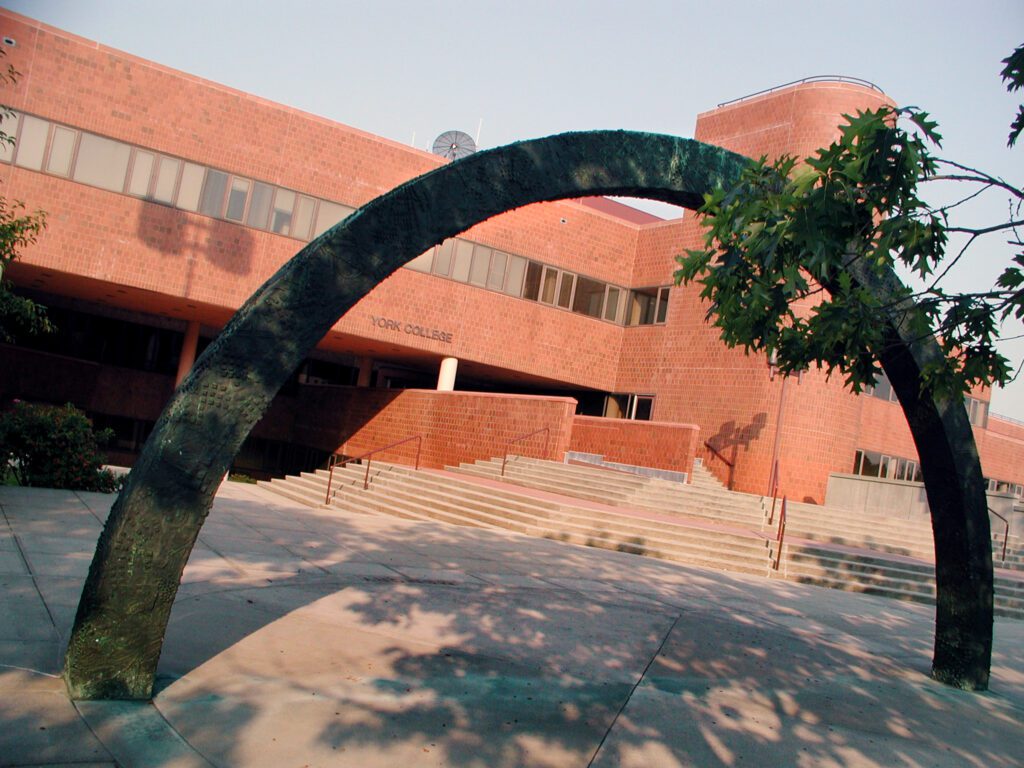
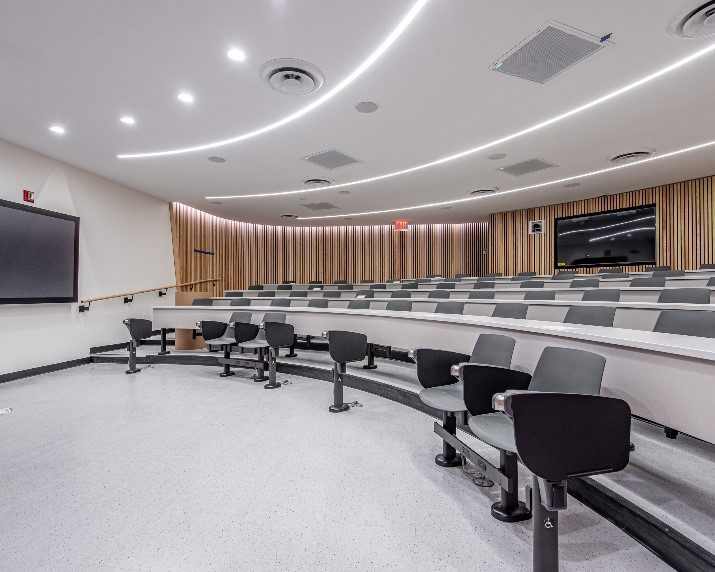
The heart of YC’s campus is the main academic building, which houses classrooms, lecture halls, laboratories, art studios, a library, computer equipment, academic and administrative offices, as well as dining halls and a bookstore. There is also a space on campus dedicated to Illinois Jacquet, an American jazz saxophonist who once lived in Jamaica.
Mission and values
YC enriches students’ lives by providing every opportunity to grow as worthy individuals and global citizens. The four pillars of this institution are: student success, academic excellence, faculty/staff support and a vibrant campus.
YC considers academic integrity to be a central value in all aspects of its activities: teaching, learning, research and service. Academic integrity means that all assignments must be completed by students independently, without unauthorized assistance. All examinations and tests must also be taken without the use of unauthorized assistance, and submitted documents must not be falsified or forged.
In addition, diversity is valued here. YC cultivates an atmosphere of acceptance of differences between people, equal opportunities for all. The multicultural nature of a sustainable academic and social environment enriches the collegial experience for all students, faculty and staff.
YC fosters an intellectual environment where students and faculty take responsibility for various achievements in academic research, creative activity, interdisciplinary cooperation and professional growth. YC creates opportunities for productive and creative interaction between students.
Another YC value is self-reflection and responsibility. Every student and staff member should analyze their performance, be able to identify problems, overcome challenges and improve decision-making. Civic engagement is also important. Each member of the YC community assumes personal responsibility for serving the common good.
Educational programs
YC offers undergraduate and graduate programs in one of three schools: Arts and Sciences, Business and Information Systems and Health Sciences and Professional Programs. Graduates work in important professional fields such as medicine, law, business, social work, aviation and science. From 1971 to 2024, YC awarded more than 30,000 bachelor’s and master’s degrees.
YC is accredited by the Higher Learning Commission of the United States and is a member of the Association of Colleges and Universities of the State of New York, the American Association of Colleges for Teacher Education and the Council for Accreditation of Teacher Education.
Student life
Most students at YC combine their studies with work or family life. YC provides part-time study opportunities and offers various sabbaticals. YC’s Child and Family Center provides quality childcare and educational programs for the children of students and staff. Local teachers plan activities that stimulate the intellectual and creative abilities of each individual child.
Scholarships and all kinds of activities facilitate and diversify the educational process. On campus, students are actively involved in extracurricular programs, sports activities, visual/performing arts, special interest clubs and community organizations where they improve their interpersonal skills. YC staff assist students in planning social, educational and recreational programs, as well as provide opportunities for leadership development.

The Division of Student Development promotes the engagement of YC students in a global society. In particular, its staff assesses the quality of programs, services and activities to enhance the student experience. They also create the conditions to support personal development, health and safety. In addition, they promote an environment that focuses on inclusion, equity and respect. The division supports students in achieving their personal and professional goals.
The practice of mentoring is also common in YC. Experienced senior students or teachers give advice, support and encouragement to those who are just starting out in higher education. In this way, everyone gets an idea of campus life, makes new and useful acquaintances and can easily focus on their studies. There is even a separate office dedicated to facilitating the adaptation of freshmen, creating opportunities and programs that improve academic and social integration.