

Thomas E. Breitenbach is best known for his painting Proverbidioms – a comic illustration of over 300 common proverbs and language clichés. He became the youngest person to receive the Prix de Rome in fine arts. Inspired by Europe, he built a castle studio to showcase his art. Learn more about this talented New Yorker on queens1.one.
Artistic Career
Thomas E. Breitenbach was born on July 29, 1951, in Queens. In high school, he was fascinated by the harpsichord and clavichord – early keyboard stringed instruments. He also learned to paint, beginning with cabinet decoration.
Breitenbach briefly studied architecture and fine arts at the University of Notre Dame, a private Catholic institution in Indiana. In 1970, he sent photographs of his work to Jim Morrison, the American musician and lead singer of The Doors. Morrison responded by sending Breitenbach ideas for a triptych (a three-part painting) along with two privately published, autographed books of his poetry. Breitenbach spent three years creating the triptych for Morrison, who intended to use it for his album An American Prayer, released seven years after the musician’s death.
In 1970, Breitenbach left university and moved to Italy, becoming the youngest recipient of the Prix de Rome in fine arts. This award was given in France from 1663 to 1968 to artists, engravers, sculptors, and architects, allowing recipients to live in Rome for a year, funded by the award’s patron. In 1978, he also received a grant from the New York Foundation for the Arts.
In 1975, at the age of 24, Breitenbach completed his iconic painting Proverbidioms. This oil painting visually represents over 300 common proverbs, phrases, and language clichés, such as “You are what you eat.” The painting includes a guide explaining each illustration.
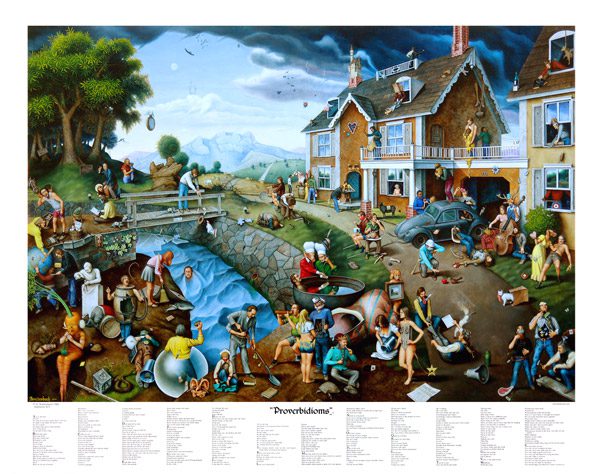
The artwork became America’s best-selling poster and has been featured in over 100 countries. Proverbidioms has appeared in books, academic papers, TV shows, and radio broadcasts, and has been produced as puzzles. It’s used in schools for teaching proverbs, in corporate creativity workshops, English language courses, and more.
The Castle Studio
In 1976, inspired by European architecture, Breitenbach returned home determined to build a castle studio to showcase his art. He constructed it on land given to him by his father in an octagonal shape with a tower. The artist drew inspiration from Orson Fowler’s 1848 Victorian-era book The Octagon House, which promotes the octagon as the ideal house shape.
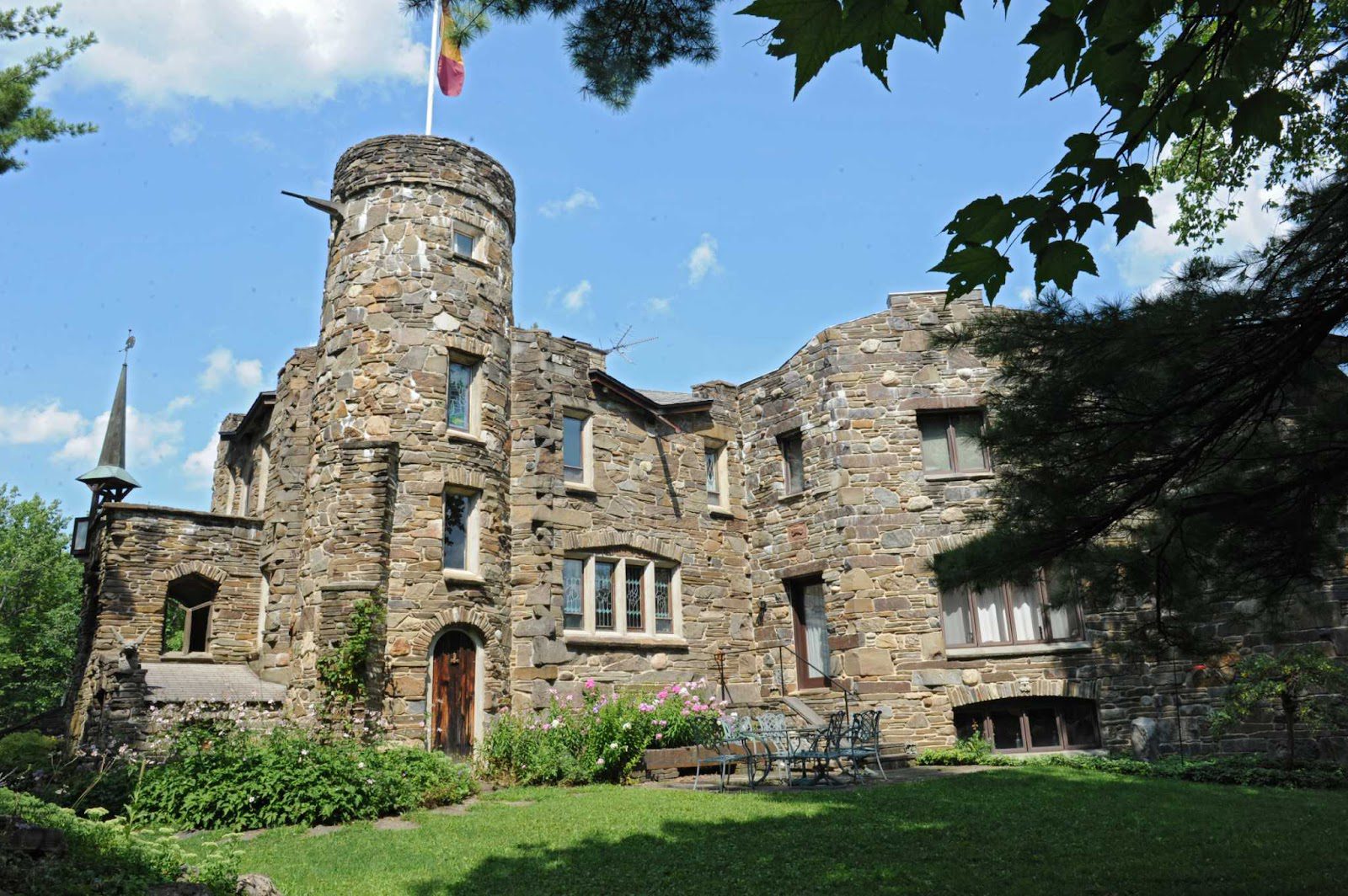
Breitenbach lived and worked in the castle. He collected stones from a nearby creek, cut trees for lumber, forged iron, crafted leaded glass windows, created furniture, tiles, murals, and more. Today, the castle and its surroundings are available for weddings, other celebrations, and for photo and film shoots.
Other Work
Thomas E. Breitenbach authored the illustrated fantasy novel Grumparar’s the New Creatures, An Adventure & Field Guide (2011). The main character, Grumparar, embarks on a journey to his homeland, facing adventures, mysteries, and escapes. The author answers quirky questions like why sneakers get holes, where house flies go in winter, and how mountains communicate. The book is filled with illustrations of intriguing creatures and maps.
The artist has also designed fonts, composed film music, and written musicals. For instance, he created Hieronymus, A Musical Fantasy – a semi-autobiographical story about Hieronymus Bosch, a Dutch painter and a renowned Northern Renaissance artist. This romantic fantasy follows Bosch as he courts Anna, the daughter of a wealthy patron, while facing challenges.
Bosch’s house is inhabited by strange creatures, a fact he tries to hide from Anna and the public. Anna soon discovers the artist’s secret. A jealous admirer named Erasmus also knows about the creatures and attempts to have Bosch arrested by church authorities for black magic. Over time, Anna begins to worry about a future with Bosch, as she longs for a traditional family and home. She tries to persuade Bosch to change his lifestyle.
Breitenbach also wrote the script for the musical Little Black Boxes. Set around 1920, the story follows a stranger who arrives in a small town on his bicycle, distributing a dozen small black boxes with strict instructions not to open them. He warns that if opened, the boxes will be empty. Those who heed his warning receive a reward, each finding something they deserve, whether it’s lost love, a revealed secret, or something else. The musical interweaves multiple stories, keeping the audience engaged.