

Harold Paris was one of America’s leading avant-garde artists, celebrated as a sculptor, engraver, and professor at the University of California, Berkeley. Through his unique artistic creations, Paris combined various materials into expressive forms to convey his emotions, thoughts, and worldview. He sought to communicate meaningful ideas, understanding art’s ability to transform perspectives and open eyes to critical issues. Learn more about this New York genius below on queens1.one.
From Journalism to Art
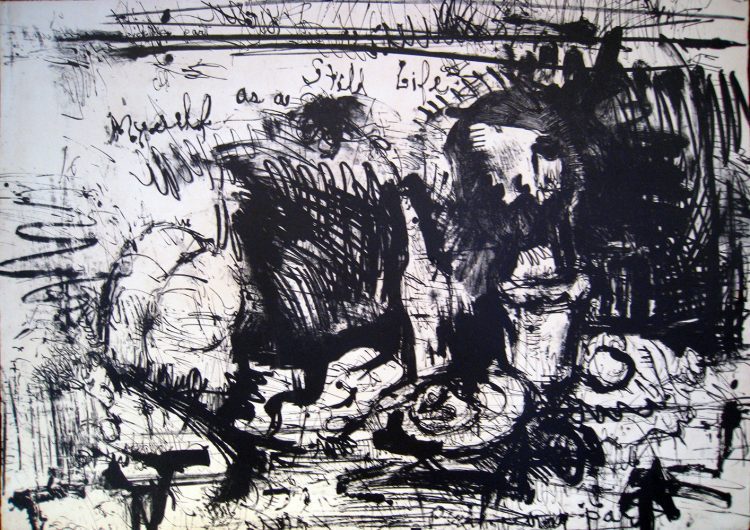
Harold Paris was born on August 16, 1925, in Queens. As a youth, he worked backstage in the theater, where his father was an actor, applying makeup for performers. His creative talents were evident even then. During World War II, Paris served as a correspondent for Stars and Stripes, a daily American military newspaper focusing on stories about U.S. troops stationed overseas. He witnessed the horrors of the Buchenwald concentration camp near Weimar, Germany, a profoundly impactful experience that shaped his art. Over 55,000 of the estimated 250,000 prisoners held at Buchenwald were tortured and killed.
Paris pursued art by studying engraving at New York’s Atelier 17 and sculptural casting at the Academy of Fine Arts in Munich, Germany. In the early 1960s, the artist settled in California. In 1963, he became a professor at the University of California, Berkeley, where he taught engraving and sculpture until 1979. During this time, he actively explored plastic figures and ceramics. Paris also co-founded a bronze foundry in Berkeley and developed innovative welding and casting techniques previously considered impossible. Notably, one of Paris’s students was Shirin Neshat, a renowned Iranian photo artist and filmmaker.
Upon his arrival in Berkeley, Paris explored a wide range of materials and pioneered the use of direct bronze casting processes. In California, he held numerous solo exhibitions, the largest of which took place in 1972 at one of Berkeley’s art museums, The California Years. This exhibition occupied the museum’s expansive lower gallery space, showcasing 10 years of the artist’s life in Berkeley. The installations included bronze works illustrating abstract expressionism, two monumental terracotta walls, and castings reminiscent of the polished forms of the late 1960s. Visitors walked among these pieces, reflecting on the artistic expressions of the time.
Art with Meaning
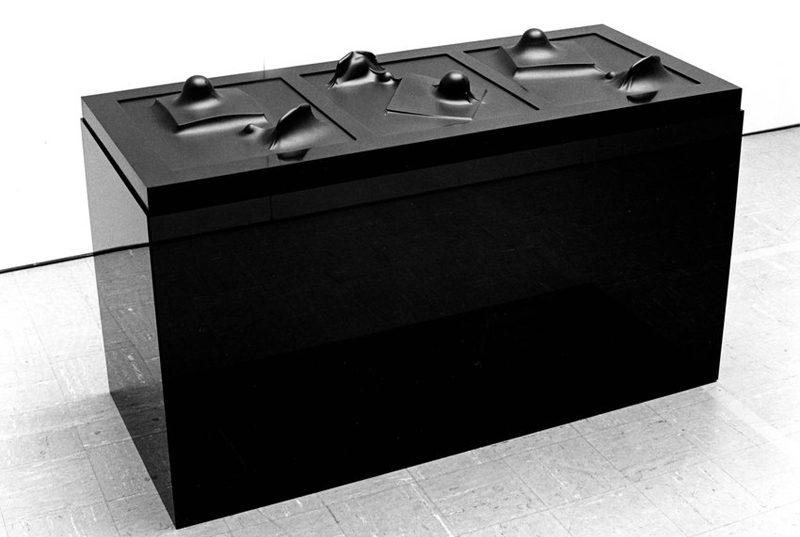
Harold Paris’s art was a blend of technical mastery, spirituality, and social purpose. As an engraver, sculptor, and performance artist, he fused forms and ideas to create unique projects. His works reflect European influences and an old-world sensitivity. Beyond crafting pieces, Paris sought to communicate significant messages. From the tragedy of Buchenwald to his response to Berkeley’s political landscape of the late 1960s, Paris highlighted the ailments of humanity.
His works, including both sculptures and engravings, are housed in prestigious collections such as the Art Institute of Chicago, the Museum of Modern Art (New York), the National Gallery of Art (Washington, D.C.), the San Francisco Museum of Modern Art, and the Whitney Museum of American Art (New York).
Combining the Incompatible
In the early 1960s, Paris often incorporated broken and discarded household items into his cast works, highlighting the contradictions between real and imaginary worlds. For example, his sculpture The Unreality of Looking Out a Window (Fene) combines a hospital bed with objects from Jewish wedding ceremonies.
In his most notable works, including monumental ceramic walls, Paris explored his spiritual concerns while avoiding literalism, which occasionally risked turning his art into awkward melodrama. His creations were often so deeply laden with religious or historical meaning that audiences struggled to fully grasp their symbolism.
One remarkable series is 26 Days of John Little, a set of monotypes crafted from everyday items like cellophane tape, string, acetate, straws, and paper scraps. Paris employed a recurring window motif and elements of blue and transparent plastic to evoke a “deep space effect” in certain sections. These collages were not intended to evoke direct associations, allowing viewers the freedom to form their interpretations. Harold Paris passed away on July 1, 1979, in California.